
About KwaZulu-Natal
An Overview of KwaZulu-Natal
KwaZulu-Natal, a province located on the eastern coast of South Africa, is a region that boasts rich geography, culture, and history.
KwaZulu-Natal, a province located on the eastern coast of South Africa, is a region that boasts a rich tapestry of geographical features, cultural diversity, and historical significance. Renowned for its stunning landscapes, KwaZulu-Natal presents an impressive mix of coastal beaches, rolling hills, and the majestic Drakensberg Mountains, making it a prime destination for nature enthusiasts and adventure seekers alike. This province covers a diverse array of ecosystems, from the subtropical coastline along the Indian Ocean to the cooler mountainous regions, each serving as a habitat for an array of wildlife.
The cultural vibrancy of KwaZulu-Natal is equally compelling. Home to various ethnic groups, including the Zulu nation, this province is a melting pot of traditions, languages, and customs. Visitors can immerse themselves in the rich heritage through cultural experiences, such as traditional dance performances, local cuisine, and craft markets, which are prominent throughout the region. These offerings reflect not only the historical roots but also the lively contemporary culture that thrives within the province.
KwaZulu-Natal is recognized as a prominent tourist destination in South Africa, attracting millions of visitors annually. Key attractions such as the historic battlefields of Isandlwana and Rorke's Drift, the bustling city of Durban, and the serene beauty of the iSimangaliso Wetland Park underline the province's significance in both tourism and South African heritage. The combination of natural beauty and cultural wealth positions KwaZulu-Natal as a leading province, encouraging exploration and offering travelers a comprehensive experience filled with adventure, history, and relaxation.
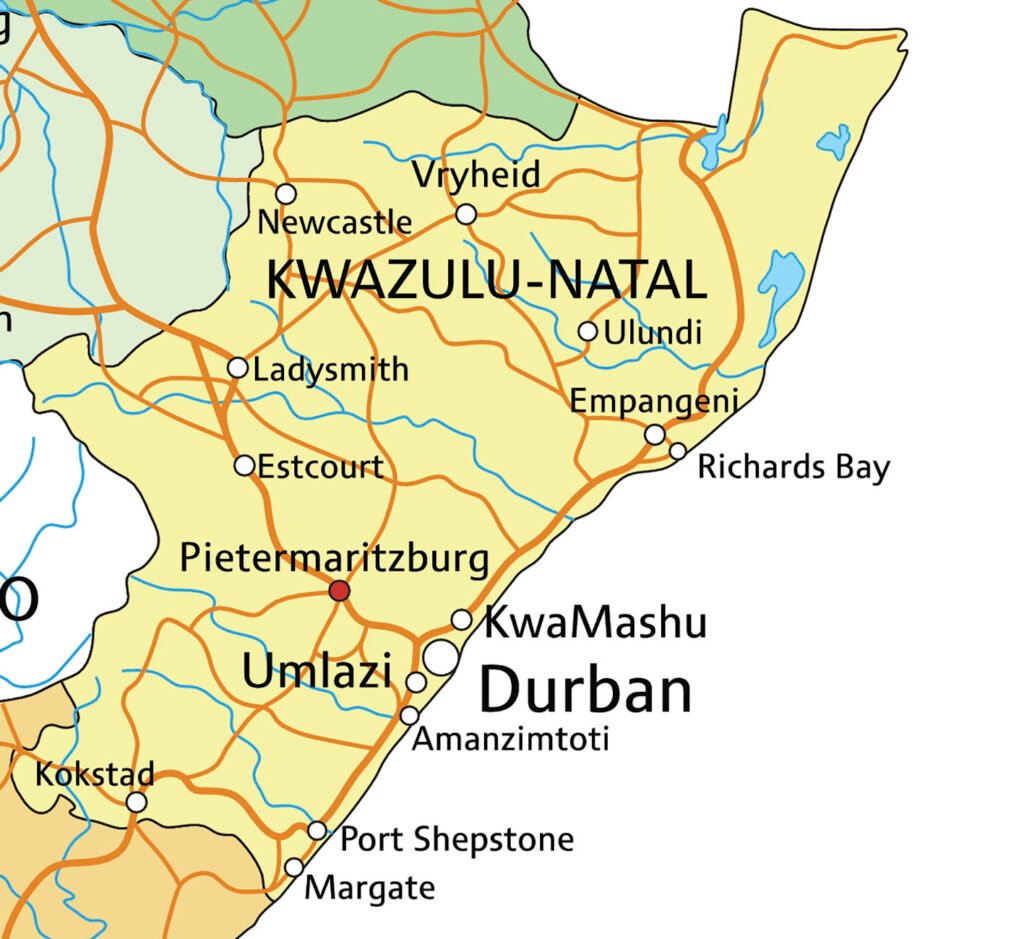
Map of KwaZulu Natal
A Brief History of KwaZulu-Natal
KZN, as KwaZulu-Natal is commonly abbreviated, boasts a rich tapestry of history that is rooted in the traditions and cultures of its indigenous peoples. The Zulu nation, which emerged as a powerful entity in the early 19th century, plays a central role in the province's historical narrative. The formation of the Zulu Kingdom under King Shaka in the early 1800s marked a significant period of consolidation and expansion, shaping social structures and cultural practices that resonate even today.
The arrival of European settlers in the mid-19th century introduced new dynamics to the region. The discovery of valuable resources and fertile lands attracted many settlers, leading to increased tensions and conflicts with the indigenous populations. A pivotal moment occurred with the Anglo-Zulu War of 1879, where the British Empire sought to dismantle the Zulu Kingdom. Though the Zulus initially achieved significant victories, the war ultimately ended with British dominance, leading to the annexation of Zululand.
The colonial period had lasting impacts on KwaZulu-Natal's social fabric and governance structures. The introduction of apartheid in the 20th century further exacerbated divisions within the region, as systemic racial segregation and discrimination took hold. KwaZulu-Natal became a focal point of resistance against apartheid, with various movements emerging to challenge the injustices faced by non-white communities. The province's history of activism contributed significantly to the eventual dismantling of apartheid and the establishment of a democratic South Africa in the 1990s.
Today, KwaZulu-Natal is a vibrant province that reflects its complex history through its diverse cultures, languages, and communities. Understanding this historical context is essential in appreciating the dynamics of contemporary KwaZulu-Natal and its ongoing evolution.
Climate and Natural Environment
KwaZulu-Natal, a province rich in biodiversity and diverse climatic conditions, offers a unique ecological landscape that caters to varying preferences and lifestyles. The province is strategically positioned along the eastern coastline of South Africa, creating distinct weather patterns influenced by both its coastal area and mountainous terrain. Along the coast, one can expect a subtropical climate characterized by warm, humid summers and mild winters. This weather pattern fosters a wide variety of coastal vegetation and supports a robust marine ecosystem, making it an attractive destination for beach tourism.
Moving inward, the province transitions into the Drakensberg Mountains, where the climate changes significantly. These majestic mountains present a cooler, more temperate environment, with variable weather that can shift rapidly due to altitude changes. Snowfall is not uncommon during the winter months, giving rise to stunning landscapes that are popular with hikers, climbers, and outdoor enthusiasts. The combination of mountain and valley ecosystems in this region harbors a stunning array of flora and fauna, some of which are endemic to the area.
In addition to the coastal and mountainous environments, KwaZulu-Natal hosts a range of subtropical forests that thrive in the warmer, wetter climates. These forests support significant biodiversity, including various species of birds, mammals, and plants, and contribute substantially to the natural beauty of the province. Furthermore, the climate in KwaZulu-Natal plays a crucial role in agricultural practices, with fertile land that supports the growth of sugarcane, subtropical fruit, and other cash crops. This agricultural richness, combined with the province's stunning environments, positions KwaZulu-Natal as a key attraction for both local and international tourists seeking adventure and natural beauty.
Demographics of KwaZulu-Natal
KwaZulu-Natal boasts a diverse demographic landscape characterized by its rich cultural mosaic. According to the latest census data, the province has a population of approximately 11 million people, making it one of the most populous regions in the country. The demographic composition is predominantly comprised of several ethnic groups, with the Zulu people being the largest, followed by significant populations of other groups, including whites, Indians, and coloured communities.
The prevalence of the Zulu ethnic group profoundly influences the social dynamics and cultural practices within KwaZulu-Natal. Though isiZulu stands as the most widely spoken language, the province is also home to a plethora of languages, reflecting its multicultural nature. Other languages such as English, Afrikaans, and various Indian languages are prevalent, especially in urban areas. This linguistic diversity fosters a rich cultural interchange, contributing to the overall social fabric of the province.
Education plays a vital role in shaping the demographics of KwaZulu-Natal. The province faces significant challenges and disparities in educational attainment, particularly in rural areas. Efforts are underway to improve access to quality education for all demographic groups, thereby reducing inequality. Moreover, the various cultural backgrounds within the community promote unique educational initiatives that incorporate local traditions and languages, fostering a more inclusive learning environment.
Demographic trends also have implications for community interactions within KwaZulu-Natal. As the population continues to grow, urbanization trends are reshaping social structures, leading to more integrated community lives. This increasing interconnectivity among varied ethnic groups encourages dialogue and collaboration, essential for social cohesion in a diverse province. Understanding these dynamics is crucial for policymakers and community leaders as they plan for the future of KwaZulu-Natal.
Economy of KwaZulu-Natal
KwaZulu-Natal (KZN) holds a significant position within the economic framework of South Africa. The province is characterized by a diverse economic landscape that encompasses key industries such as agriculture, manufacturing, mining, and tourism. Each of these sectors plays a vital role in shaping the province's financial stability and growth potential.
Agriculture remains one of the cornerstones of KZN's economy, contributing notably to both local and national food supplies. The province's favorable climate and rich soil facilitate the cultivation of a variety of crops, including sugar cane, fruits, and vegetables. In addition, livestock farming is prevalent, boosting meat production. These agricultural activities provide substantial employment opportunities and contribute significantly to the gross domestic product (GDP) of KwaZulu-Natal.
The manufacturing sector in KZN is also robust, encompassing industries such as food processing, automotive production, and furniture manufacturing. The province's strategic location, with access to major ports like Durban, enhances its manufacturing capabilities and enables effective distribution channels. This sector is crucial for job creation and directly influences the province's GDP, reflecting the integral nature of industrial output in KwaZulu-Natal.
Mining is another critical component of the provincial economy. KwaZulu-Natal is rich in mineral resources, including coal, titanium, and sand, which are essential for various industrial applications. However, the environmental impact of mining activities poses challenges that require careful management and sustainability efforts.
Tourism is a thriving industry in KwaZulu-Natal, with its scenic landscapes, cultural heritage, and diverse wildlife attracting millions of visitors each year. The sector not only generates substantial revenue but also stimulates growth in other areas, such as hospitality and transportation, enhancing employment opportunities for local communities.
Despite these strengths, KwaZulu-Natal faces economic challenges, including unemployment and inequality, which necessitate targeted strategies to harness its full potential. As the province continues to evolve, identifying and capitalizing on emerging opportunities will be essential to fostering sustainable economic growth and improving the quality of life for its residents.
Tourism in KwaZulu-Natal
KwaZulu-Natal is a renowned destination for tourists, offering an extensive array of attractions that cater to diverse interests. Among its most significant natural features are the breathtaking Drakensberg Mountains, which serve as a major draw for hiking and outdoor adventure enthusiasts. With its dramatic peaks and rich biodiversity, the Drakensberg provides numerous trails and views that are perfect for both novice and experienced hikers. The region boasts several UNESCO World Heritage sites, emphasizing not only the remarkable landscapes but also the area's cultural significance.
The province's coastline along the Indian Ocean is another major attraction, famous for its beautiful beaches. From the renowned Umhlanga Rocks to the tranquil shores of the South Coast, KwaZulu-Natal offers various aquatic activities such as surfing, snorkeling, and diving. This vibrant coastal environment appeals to families, couples, and solo travelers alike, contributing significantly to the tourism sector. Additionally, the warm climate allows for year-round enjoyment, enhancing the province's allure.
Cultural heritage sites further enrich the province's tourism landscape, showcasing the rich history and traditions of the Zulu people. Historical attractions, such as the Battlefields Route, provide insights into the region's past, including significant conflicts and events that have shaped South Africa's history. Visitors can immerse themselves in local culture through art, music, and traditional dance, creating a holistic tourism experience.
Eco-tourism and adventure tourism are pivotal components of KwaZulu-Natal's tourism strategy. The province promotes sustainable travel, encouraging visitors to explore its natural resources responsibly. Meanwhile, various festivals and events, such as the Durban International Film Festival and the Zulu Cultural Festival, display the region's vibrant cultural landscape and attract national and international visitors alike. These elements combine to make KwaZulu-Natal a compelling destination that continues to thrive in the tourism sector.
Cultural Heritage and Traditions
KwaZulu-Natal is a region rich in cultural heritage, showcasing a vibrant tapestry woven from the threads of its diverse communities. The Zulu culture stands at the forefront of this heritage, profoundly influencing the region's traditions, music, dance, and art. The Zulu people, known for their elaborate traditions and communal values, celebrate life through numerous rituals and ceremonies that reflect their deep connection to the land and their ancestors.
One of the most prominent aspects of Zulu culture is its music and dance, which play a significant role in both social gatherings and ceremonial events. Traditional Zulu music often features intricate rhythms, vibrant vocal harmonies, and the striking sound of drums, all of which transcend generations. Intense dance performances, most notably the indlamu dance, are integral to Zulu celebrations, showcasing not only athletic skill but also storytelling through movement. These performances allow the community to come together and celebrate their traditional customs, reinforcing their identity.
In addition to Zulu customs, KwaZulu-Natal is home to a mélange of cultural influences, including Indian, Afrikaans, and British traditions. This diversity enriches the cultural scene, resulting in a dynamic blend of festivals and artistic expressions. Events such as the Durban International Film Festival and the Umtata Cultural Festival highlight the intersection of various cultures, drawing visitors from all corners of South Africa and beyond. Additionally, the region's art scene is vibrant, featuring traditional beadwork, pottery, and contemporary art that reflect both historical and modern narratives.
The profound coexistence of various communities in KwaZulu-Natal underscores a broader cultural heritage that is ever-evolving. As these cultures interact and share their practices, they contribute to a composite identity that embodies the spirit of South Africa. This rich cultural foundation serves as an enduring reminder of the region’s past, while also inspiring a future where tradition and modernity can harmoniously coexist.